
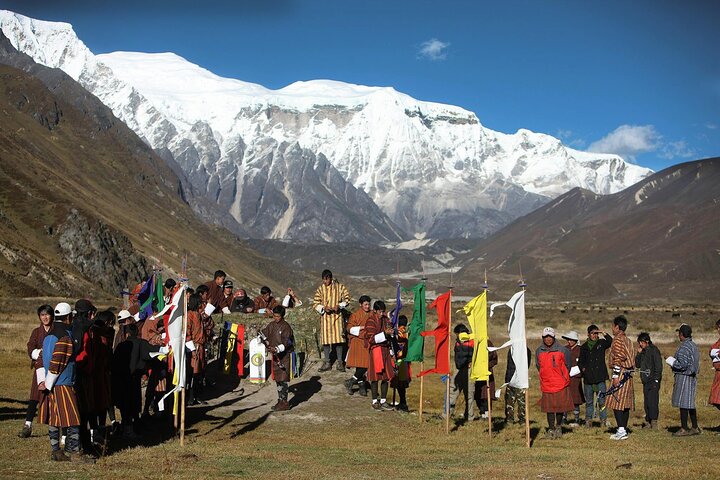
Jomolhari Trek: 13-Day Paro to Thimphu Route via Lingzhi
A trans-Himalayan journey from Paro to Thimphu that climbs to 4,930m, passes Jomolhari Basecamp (Jangothang) and spends nights in full-service camps. This 13-day itinerary blends high passes, alpine meadows and Himalayan culture — ideal for fit trekkers comfortable with long days and altitude.
The Experience
Before You Go
Acclimatize deliberately
Schedule rest days (Jangothang acclimatization is included) and avoid rapid ascent; symptoms of altitude illness can appear above 3,000m.
Boots and traction
Use well-broken-in, waterproof trekking boots and bring lightweight crampon-compatible gaiters for icy patches at high passes.
Hydration and water treatment
Carry 2–3L capacity and treat water by filter or purification tablets — streams are clear but not sterile.
Start early each day
Mountain weather builds after midday; beginning hikes at first light reduces exposure to storms and gives better views.
Local Knowledge
Hidden Gems
- •Drukgyal Dzong ruins above Paro — quieter viewing and sunset light
- •Tshophu alpine lake near Bhonte La for reflective mountain photos
Wildlife
- •Bharal (blue sheep)
- •Himalayan pheasant (snowcock)
Conservation Note
Trekking here operates under strict permitting; follow leave-no-trace, use designated campsites, and support local guides to minimize impact.
The Jomolhari massif is revered in Bhutanese and Tibetan Buddhism; pilgrimage routes and dzong ruins along the trail mark centuries of religious and strategic significance.
What to Bring
Four-season sleeping bag (rated to -10°C / 14°F)Essential
Nights at Jangothang and high passes are cold; liners are provided but a warm sleeping bag is essential.
Sturdy waterproof trekking bootsEssential
Protects ankles on scree, stream crossings and long descents across varied terrain.
Layered insulating clothing (down jacket + softshell)Essential
Temperatures swing dramatically between sun and wind at high altitude; layers let you adapt.
Water filter or purification tabletsEssential
Reliable treatment for stream water keeps weight down and reduces risk of gastrointestinal issues.
Common Questions
Do I need a visa to trek in Bhutan?
Yes — an e-Visa is required and is processed by your local operator; the tour includes visa fee and processing (typically 4–5 business days after passport submission).
How hard are the daily hiking stages?
Daily stages vary from short 3–4 hour walks to long 8–9 hour days with significant elevation change; expect sustained uphill and high passes up to ~4,930m.
Are porters and camping gear provided?
Yes — this itinerary includes full-service outdoor camping, porters/ponies and a sleeping bag liner; personal sleeping bags are recommended for warmth.
When is the best time to go?
Spring (March–May) and autumn (September–November) offer the most stable weather, clearer mountain views and blooming rhododendrons or post-monsoon clarity.
Book This Experience
Check AvailabilityDuration
13 days (9 days trekking)
Location
Paro, Paro District
Difficulty
challenging
Fitness Level
Good to excellent cardio endurance; able to hike 6–9 hours on uneven terrain at altitude and carry a daypack or assist with light load-carrying.
Ready to Explore Paro?
Book your guided walking tour and discover the hidden stories of this historic mountain city.
Check Availability & Book Now